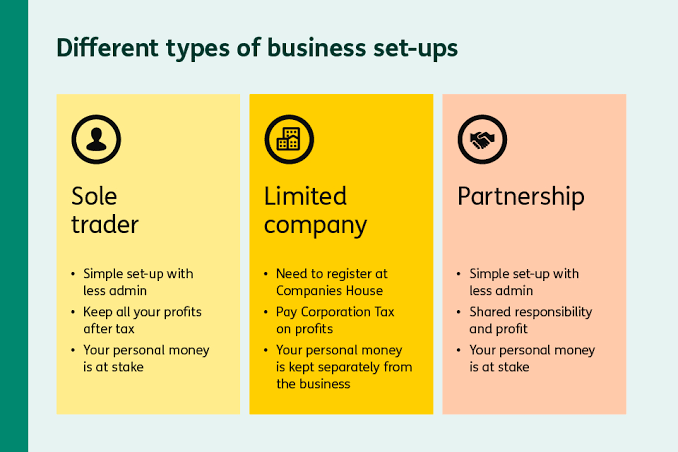

One of the areas that can be confusing when looking at my property business is understanding how my income is structured.
At present, my income from the property business comes from three separate sources:
Properties owned personally in my own name
Properties owned by MW Maiden Property Ltd
Properties owned by GG-623-129 Ltd
This means that the income generated across my property portfolio does not all appear within the accounts or Companies House filings of the limited companies.
How I Receive My Income
The rental income from properties that I personally own is declared through my personal tax return.
Income generated by properties held within my limited companies is treated separately. I generally receive money from the companies through dividends and, occasionally, through repayment of directors' loans where applicable.
This creates an important distinction when looking at the overall size of the property business.
The rental income from my personally owned properties is not included in the turnover reported by my limited companies at Companies House. Therefore, simply looking at the turnover of the companies does not provide a complete picture of the total income generated across my property portfolio.
This is an important point to understand when looking at the structure of the business as a whole.
Why Do I Own Properties Personally?
There is a historical reason for some of this structure.
Like many landlords, I did not originally set out with a plan to build a property portfolio using multiple ownership structures.
Some of my properties were previously my main residences. When I subsequently moved home, I made the decision not to sell the properties. Instead, I retained them and rented them out.
As a result, those properties remained in my personal name.
Over time, I have also acquired properties through limited companies, creating the structure that I have today.
The Tax Considerations
Tax is obviously an important consideration when deciding how property should be owned.
Limited companies and personally owned properties are subject to different tax rules, particularly when it comes to rental profits and mortgage interest.
Limited companies can generally claim relief for qualifying mortgage interest and finance costs when calculating their taxable profits. Personally owned residential property is subject to different rules, with mortgage interest relief restricted compared with property held within a company.
However, there is an important factor in my particular situation.
Most of the properties that I personally own are mortgage-free.
Therefore, there is little or no mortgage interest for me to obtain relief against on these properties in the first place.
This makes transferring these properties into a limited company much less attractive from a financial perspective.
Why Not Simply Transfer Everything Into a Limited Company?
At first glance, moving all of the properties into a limited company might appear to be the obvious solution.
In reality, it isn't quite that simple.
Transferring properties that I already own personally into a limited company can potentially create significant costs and tax consequences. Depending on the circumstances, this can include Capital Gains Tax and Stamp Duty Land Tax (SDLT).
These costs need to be considered carefully before making any decision to restructure an existing property portfolio.
In my case, the potential benefits of transferring largely mortgage-free properties into a limited company do not justify the potential costs involved.
It therefore makes little financial sense to restructure the portfolio simply for the sake of having everything under one company.
My Approach Going Forward
For the foreseeable future, I have decided to keep my existing company and property structure broadly as it is.
The properties that I currently own personally will remain personally owned, while the existing limited companies will continue to operate as they currently do.
For new property acquisitions, however, my intention is to purchase through MW Maiden Property Ltd where appropriate.
This gives me the opportunity to build the future portfolio within a limited company structure and benefit from the tax treatment available to companies, including the treatment of qualifying mortgage interest and finance costs.
For me, this is a more practical approach than trying to restructure the entire portfolio retrospectively.
Rather than spending significant amounts of money moving properties that I already own, I can leave the existing portfolio in place and use the company structure for future acquisitions.
The Bottom Line
My property portfolio has evolved over many years rather than being created from a single, carefully designed structure from day one.
Some properties are personally owned because they started life as my own homes. Others have subsequently been purchased through limited companies.
There isn't necessarily a single "right" structure for every landlord.
For my circumstances, the most sensible approach is to leave the existing properties where they are and use MW Maiden Property Ltd for future acquisitions where appropriate.
Tax rules and rates can change, and the most suitable structure will depend on individual circumstances. This article describes my own approach and is not intended to provide tax or financial advice.